
Abhishek Sharma struck a 35-ball century as India beat New Zealand by six wickets in Wellington on October 27, securing the five-match T20I series with two games remaining. He finished with 113 from 38 deliveries as India chased a target of 199 in 13.2 overs, Reuters reported.
A PTI report carried by Rediff confirmed the six-wicket result and India’s unassailable 3–0 lead. It also distinguished the two numbers central to Abhishek’s innings: the hundred arrived from 35 balls, while his completed knock lasted 38 balls.
A rapid chase settled the series
New Zealand’s 198 set India a target just short of 200. India completed the pursuit with 40 balls left in a standard 20-over innings. That remaining-ball figure is calculated from the reported finishing point of 13 overs and two balls; it is not a separate claim about a competition record.
For New Zealand, the result ended the possibility of winning this five-match series. The remaining fixtures still have their own match outcomes and selection questions, even though they cannot change which team has won the series.
The hundred and the final score are different milestones
Blooming 9 News analysis: A century’s ball count measures how quickly a batter reaches 100. The final innings score describes the whole stay at the crease. Confusing those two stages would turn a 35-ball hundred into an inaccurate description of a 35-ball completed innings.
Likewise, cricket’s over notation is not a decimal. The notation 13.2 means 13 completed overs plus two legitimate deliveries, rather than 13.2 multiplied by six. That distinction is essential when explaining the speed of a chase or how many balls remained.
What the result establishes—and what follows
The margin and time remaining show that India completed this particular pursuit decisively. They do not establish that every future target of the same size will be equally manageable. Conditions, the bowling attack and how an innings develops all affect a chase.
A series already decided can create room for selection choices, but a change to the playing XI should be reported only after the team confirms it. The result does not itself show that either side has decided to rotate players, rest a bowler or alter its batting order.
The next reports worth following are the confirmed teams and results of the remaining matches. This article records the completed third T20I and the series position immediately afterwards; it is not a live scorecard for a later fixture.
Sources and image context
- Reuters via CNA: third-T20I report, October 27, 2026.
- PTI via Rediff: Abhishek’s innings and India’s 3–0 series lead.
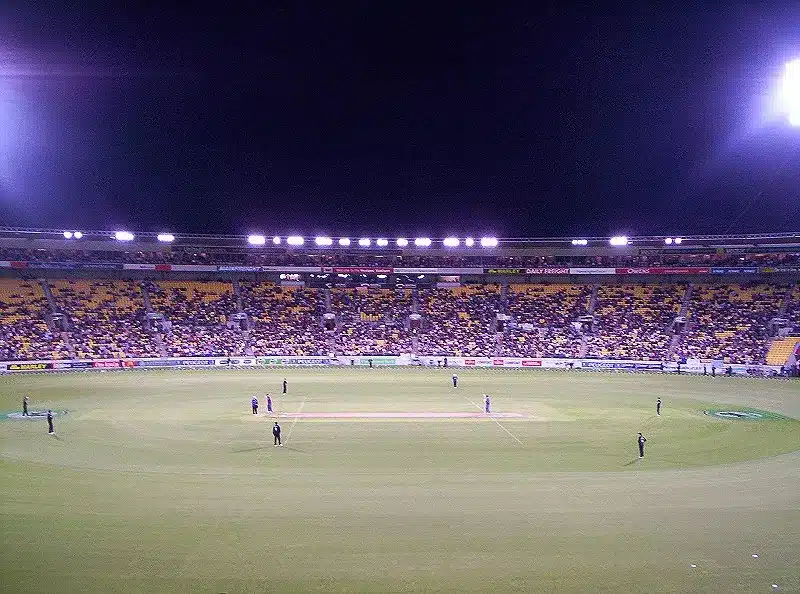
The featured photograph is an explicitly labelled historical image of the Wellington venue, not a photograph of this match or of Abhishek’s innings.
AI-assisted article prepared from the linked public sources.


